

Table of Contents
The Rising Cancer Burden in India: Understanding Oncology and the Future of Cancer Care
Oncology meaning exactly?
To understand the growing cancer burden we need to answer a question: what is oncology?
Oncology is a branch of medicine that deals with the prevention, diagnosis, treatment and long-term management of cancer. Doctors who specialize in this field are called oncologists. Their work includes oncology, which is drug therapy, radiation oncology and surgical oncology.
Modern oncology care is not about treating tumors. It is about detection, supportive care, nutritional support, rehabilitation, psychological counseling and survivorship programs that help patients have a better life during and after treatment.
India’s Growing Cancer Challenge
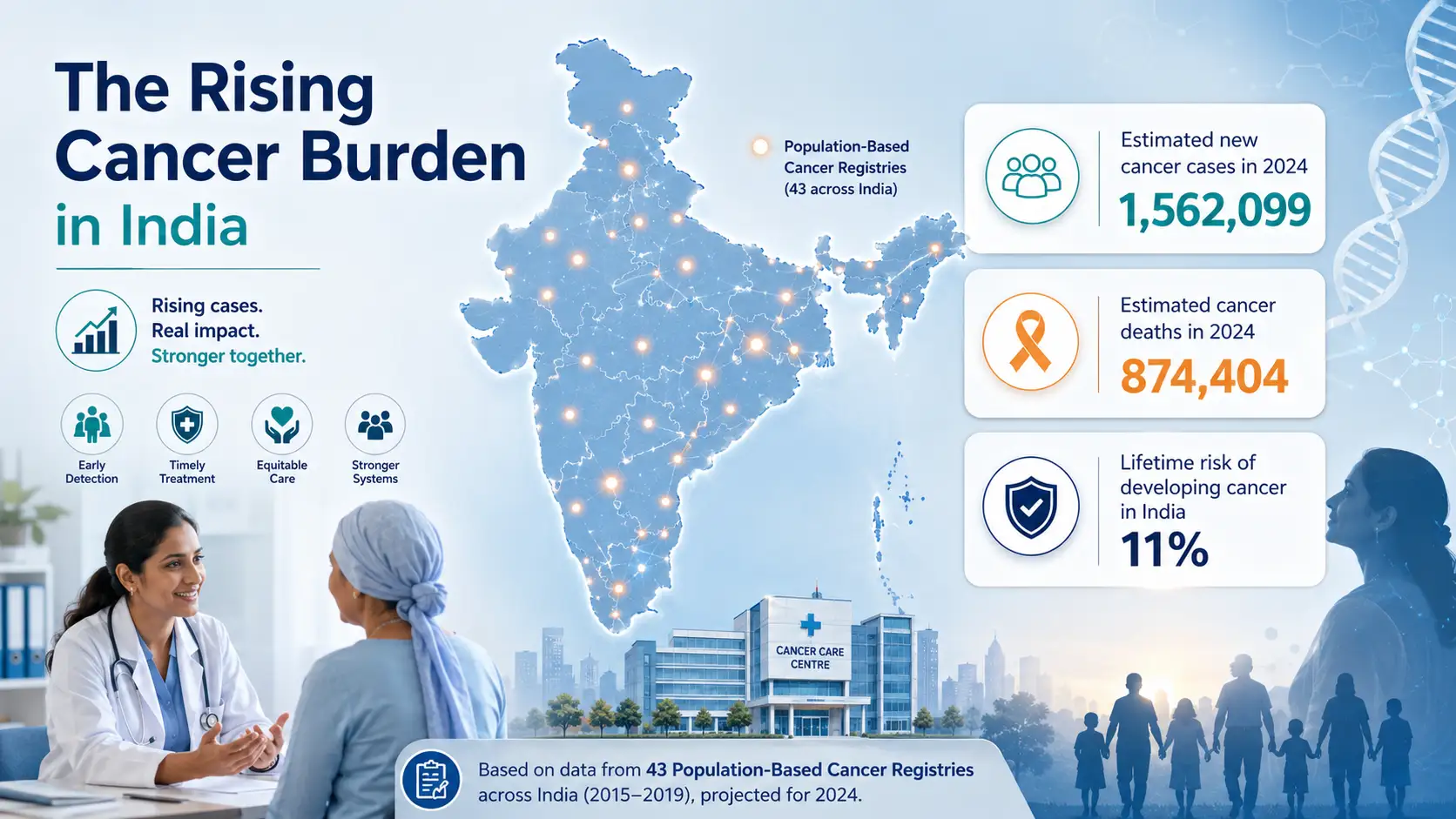
A important study published in JAMA Network Open in 2025 looked at data from 43 Population-Based Cancer Registries across India between 2015 and 2019. It projected the cancer burden for 2024. The findings show that cancer is becoming a public health concern in the country. The estimated cancer burden for 2024 includes:
- Estimated new cancer cases in 2024: 1,562,099
- Estimated cancer deaths in 2024: 874,404
- Lifetime risk of developing cancer in India: 11%
These numbers show that cancer incidence and mortality are rising steadily. This emphasizes the need for stronger cancer care infrastructure, public awareness and access to affordable treatment.
Which Cancers Are Most Common in India?
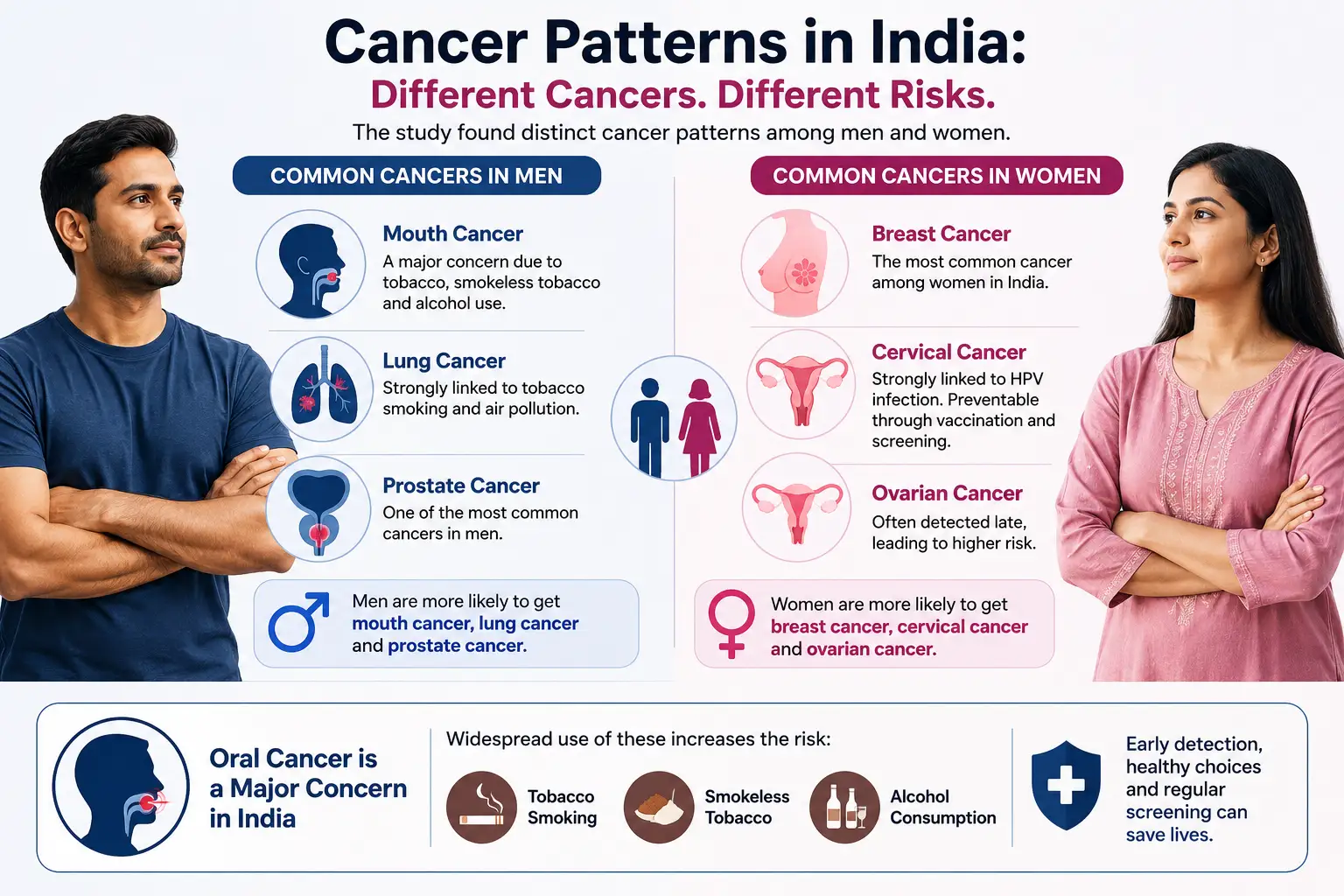
The study found cancer patterns among men and women.
Common cancers in men include:
- Mouth cancer
- Lung cancer
- Prostate cancer
Common cancers in women include:
- Breast cancer
- Cervical cancer
- Ovarian cancer
Men are more likely to get mouth cancer, lung cancer and prostate cancer. Women are more likely to get breast cancer, cervical cancer and ovarian cancer. Oral cancer is a concern in India due to the widespread use of tobacco, smokeless tobacco and alcohol.
Regional Differences in Cancer Incidence
One of the important findings was the presence of significant regional disparities.
- Aizawl in Mizoram recorded the cancer incidence rates in both men and women.
- Kamrup Urban in Assam and East Khasi Hills in Meghalaya also showed high incidence rates.
- Big cities like Delhi, Chennai, Bengaluru and Hyderabad reported cancer incidence than many rural regions.
This suggests that urbanization, lifestyle changes, tobacco use, environmental factors and better diagnostic access may all contribute to reported cancer rates.
Why Early Detection Is Critical
Many cancers in India are diagnosed at a stage when treatment becomes more complex and survival rates decline.
Key screening measures include:
- Oral examination for tobacco users
- Mammography for breast cancer
- Pap smear or HPV testing for cancer
- Low-dose CT scan for high-risk lung cancer patients
Early detection allows for less aggressive treatment, lower treatment costs and better survival outcomes. Public education campaigns and community screening programs are components of effective oncology care.
The Role of Oncology Drug Manufacturing
As cancer cases increase the demand for high-quality oncology medicines is rising rapidly. This brings attention to oncology drug manufacturing, which involves the development and production of:
- Chemotherapy drugs
- Targeted therapies
- Immunotherapy agents
- Hormonal therapies
- care medications
A reliable cancer medicine manufacturer must follow strict quality standards to ensure safety, efficacy and consistency. India has emerged as a hub for pharmaceutical manufacturing and many oncology pharma companies are working to make cancer treatment more affordable.
What Modern Oncology Care Looks Like
Today oncology care is multidisciplinary. A patient may be treated by a team that includes:
- Oncologist
- Radiation oncologist
- Surgical oncologist
- Supportive care specialist
- Nutrition expert
- Psychologist or counselor
This integrated approach improves not only survival but also the patient’s physical, emotional and social well-being.
The Future of Cancer Care in India
To reduce the cancer burden India must strengthen its cancer care ecosystem through:
- Tobacco control policies
- HPV vaccination programs
- Expansion of cancer screening services
- Investment in oncology hospitals and diagnostic centers
- Research and innovation in oncology drug manufacturing
- Collaboration between government, hospitals, researchers and oncology pharma companies
With diagnosis evidence-based treatment and continued innovation millions of patients can achieve better outcomes and improved quality of life.
The latest National Cancer Registry data clearly show that cancer is no longer a healthcare issue—it is a national health priority. Understanding oncology and the importance of oncology care is essential for patients, caregivers, healthcare professionals and policymakers.
The rising burden of lung, breast and cervical cancers highlights the need for stronger prevention strategies, early detection programs and access to affordable medicines from trusted cancer medicine manufacturers and leading oncology pharma companies.
By investing in oncology drug manufacturing, advanced diagnostics and patient-centered cancer care India can build a resilient healthcare system and significantly improve survival and quality of life for people affected by cancer.
Frequently Asked Questions (FAQs)
What is oncology?
Oncology is the branch of medicine that focuses on the prevention, diagnosis, treatment, and management of cancer. It includes medical oncology (drug therapy), surgical oncology, and radiation oncology to provide comprehensive cancer care.
What is the meaning of oncology?
The meaning of oncology comes from the Greek word onkos, meaning mass or tumor, and logos, meaning study. It refers to the scientific study and medical treatment of cancer.
Why is oncology important in India?
Cancer is one of the leading causes of illness and death in India. With an estimated 1.56 million new cancer cases and over 874,000 cancer-related deaths in 2024, strengthening oncology services is critical for improving early diagnosis, treatment outcomes, and patient survival.
Which cancers are most common in India?
According to the National Cancer Registry Programme (NCRP):
- Men: Mouth (oral), lung, and prostate cancers
- Women: Breast, cervical, and ovarian cancers
What are the major risk factors for cancer?
Common risk factors include:
- Tobacco smoking and smokeless tobacco
- Alcohol consumption
- Unhealthy diet and obesity
- Physical inactivity
- HPV and Hepatitis B infections
- Environmental pollution
- Family history and genetic factors
Why is early cancer detection important?
Early diagnosis significantly improves treatment success, reduces healthcare costs, and increases survival rates. Regular screening helps detect cancer before symptoms become severe.
What is oncology care?
Oncology care is a comprehensive approach to cancer management that includes:
- Cancer screening and diagnosis
- Chemotherapy, targeted therapy, immunotherapy, and radiation therapy
- Surgery
- Pain and symptom management
- Nutritional support
- Psychological counseling
- Rehabilitation and survivorship care
What is oncology drug manufacturing?
Oncology drug manufacturing is the process of developing and producing medicines used for cancer treatment, including chemotherapy drugs, targeted therapies, immunotherapies, hormonal therapies, and supportive care medicines. Manufacturers follow strict quality standards such as WHO-GMP and international regulatory guidelines.
What should you look for in a cancer medicine manufacturer?
A reliable cancer medicine manufacturer should offer:
- WHO-GMP certified manufacturing facilities
- High-quality and safe oncology products
- Regulatory compliance
- Consistent product availability
- Research-driven innovation
- Affordable treatment options
How do oncology pharma companies contribute to cancer care?
Leading oncology pharma companies play a crucial role by developing innovative cancer medicines, improving access to affordable treatments, manufacturing supportive care products, supporting clinical research, and collaborating with healthcare providers to enhance patient outcomes.
Can cancer be prevented?
While not all cancers are preventable, many can be reduced by:
- Avoiding tobacco and excessive alcohol
- Maintaining a healthy weight
- Eating a balanced diet
- Exercising regularly
- Getting vaccinated against HPV and Hepatitis B
- Participating in regular cancer screening programs
What is the future of cancer care in India?
The future of cancer care in India lies in:
- Precision oncology and personalized medicine
- Immunotherapy and targeted therapies
- Artificial intelligence-assisted diagnostics
- Improved oncology drug manufacturing
- Expansion of cancer screening programs
- Greater collaboration among hospitals, researchers, and oncology pharma companies to improve patient access and outcomes.
References
- * National Cancer Registry Programme Investigator Group. Cancer. Mortality Across 43 Cancer Registries in India. JAMA Network Open. 2025;8(8):E2527805.
- * International Agency for Research on Cancer (IARC). Global Cancer Observatory (GLOBOCAN) 2022. Https://gco.iarc.fr/
- * Indian Council of Medical Research (ICMR). National Centre, for Disease Informatics and Research (NCDIR). National Cancer Registry Programme reports. Https://ncdirindia.org/
- * World Health Organization (WHO). Cancer fact. Cancer control strategies. Https://www.who.int/news-room/fact-sheets/detail/cancer
Explore More
-
Donyelle Jones Died at 46 After Battling Cancer: What Her Fight Teaches Us About Breast Cancer
-
The Future of Oncology: New Treatments are Changing Head and Neck Cancer Care
-
The Rising Cancer Burden in India: Understanding Oncology and the Future of Cancer Care
-
Managing Radiation Skin Reactions: The Growing Role of Hyaluronic Acid
-
Hodgkin's Lymphoma: Understanding the Causes, Symptoms, Cancer Stages, and Advances in Oncology
-
Oral Mucositis in Cancer Patients: Why Prevention and Early Supportive Care Matter
-
Causes of Lung Cancer Disease: Understanding the Rising Burden, Risk Factors, and Early Warning Signs
-
The Science Behind Urea Creams: More Than Just a Moisturizer
-
The Growing Role of Capital Equipment in Modern Oncology Care
-
Whey Protein: A Science-Backed Nutritional Ally in Modern Oncology Care